
Probable Cause Under Virginia §19.2-72
Virginia Code § 19.2-72 spells out the review that comes before an arrest warrant. An authorized officer examines the complainant and any witnesses under oath. If probable cause holds up, a warrant may issue. The complaint alone does not become a warrant on its own. In Amelia County, that review can happen well before any local officer knocks on a door. The statute also sets written-complaint rules, including a special route for felony complaints. A private felony complaint needs the authorization the law describes before a magistrate may issue the warrant. Keep in mind the judicial officer who issues process and the agency that later serves it hold different jobs. The official code page spells out each of these steps.
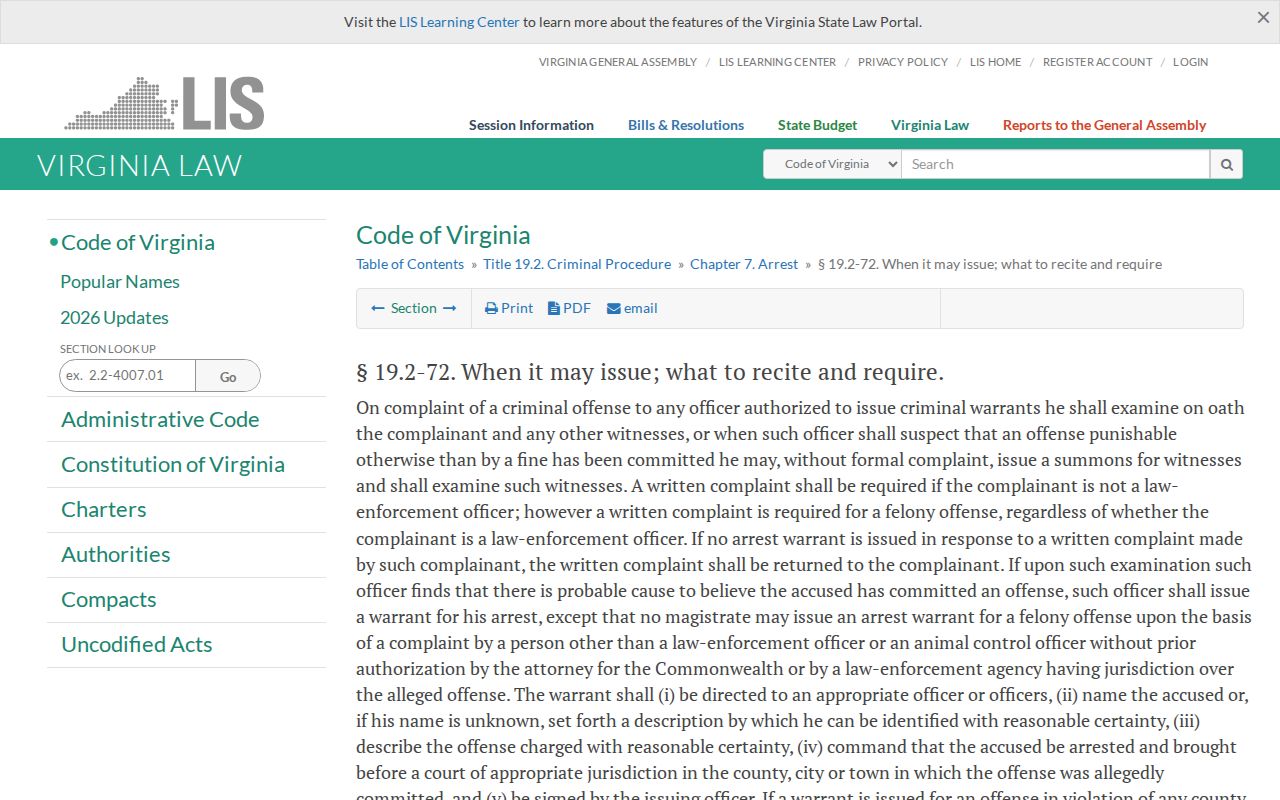
In Amelia County, read the statute alongside the court rule, and confirm any single case with its issuing court. Virginia Code § 19.2-72 supplies the issuance route.
Arrest Warrants in Amelia County
An arrest warrant is judicial process that lets law enforcement take a person into custody. A magistrate or judge looks at sworn facts first. Probable cause is the test. In Amelia County, adult misdemeanor and traffic cases usually run through General District Court, while felony matters follow the Circuit Court path. JDR process carries its own privacy rules. One wrinkle trips people up: the judicial officer who issues the warrant may sit in a different office from the court that receives the later case. The clerk can name the return court and the next setting. The public screen may show the case yet not the full warrant document, so ask the clerk for anything the display leaves out.
Magistrate, Judge, Clerk, and Sheriff
Each Amelia County office plays its own part. The magistrate or judge reviews the complaint and may issue process, while the clerk keeps the case file and can explain hearings or filed papers. The Sheriff's Office serves warrants and answers agency questions, but it does not decide the charge or recall a court order. A prosecutor, a law-enforcement officer, and a court clerk each hold separate functions too.
- Issuing officer
- Reviews the sworn complaint and decides whether process may issue.
- Clerk
- Maintains the case record and routes questions about court entries.
- Sheriff
- Handles local service and agency-held process questions.
The Amelia County Sheriff page lists (804) 561-2118, with no separate warrant unit named.
What an Amelia County Arrest Warrant Contains
A warrant record may list the person, the court process, the case number, the charge, the Code Section, the issue date, the judicial officer, and the return court. Bail terms and a service return can appear as well. OCIS does not promise to show every field or the warrant itself. Ask the clerk in Amelia County about anything missing from the official case paper.
| Case number | Use the exact identifier printed on the court paper: number shown on process. No Amelia warrant-number format was located. |
|---|---|
| Person and charge | Identifies the named person, alleged offense, and applicable code when entered. |
| Issuing officer / court | Shows who authorized process and which court handles the case. |
| Issue date | The date printed in the official record; confirm later action with the clerk. |
| Bond or release terms | Ask the court or magistrate for the order that applies; no countywide schedule was found. |
| Service / return | May identify the agency and return date if the information was entered. |
Sealed Affidavits and Public Access
Asking about an arrest-warrant status is not the same as requesting the supporting affidavit. Virginia Code § 19.2-54 covers search-warrant affidavits, warrants, and returns, and those papers may become public after execution or after the statutory period unless a court temporarily seals them. A public case result does not prove every supporting document is open. For a warrant question in Amelia County, ask the court directly whether a record is filed, public, redacted, or still under seal. The official code text carries the access and sealing terms.
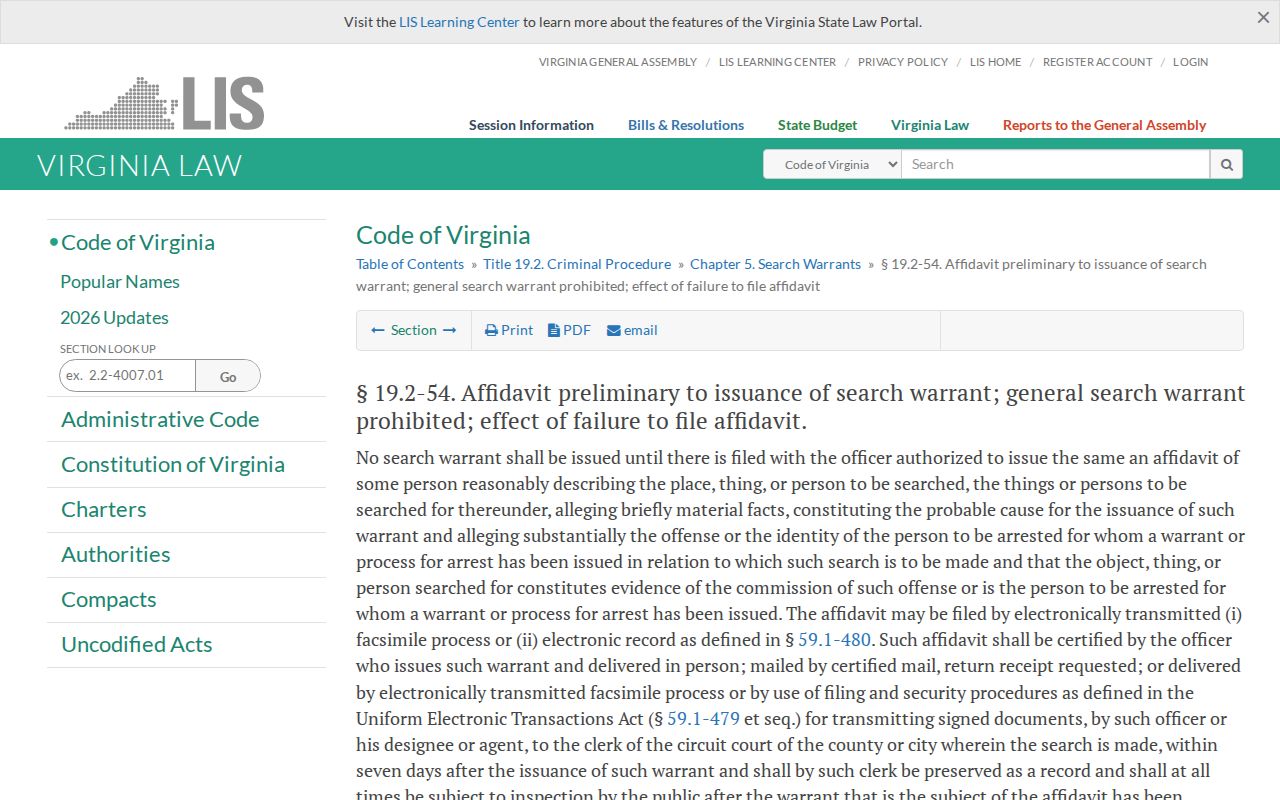
To request a record from an Amelia public body, use the record-specific FOIA route and expect statutory limits. Virginia Code § 19.2-54 describes that path.
How Amelia County Arrest Warrants Are Served
The Amelia County Sheriff's Office is the county's primary law-enforcement agency and may serve local process. Virginia State Police or another agency can serve process from a different jurisdiction. There is no warrant-specific line. The Sheriff's public page lists a general contact number, so call (804) 561-2118 to ask how the office confirms service and where a person should report. A voluntary appearance can still involve booking, magistrate review, release conditions, or a court setting. Amelia County offices publish no standard walk-through schedule. Before you travel, confirm location and hours with the court and the Sheriff.
VCIN and NCIC Are Not Public Searches
Police use Virginia's VCIN and the national NCIC system for criminal-justice warrant information. The public cannot log in for a self-check. Virginia Code § 19.2-390 requires law-enforcement entry for felony warrants or capias within 72 hours after the agency receives them. That reporting duty creates no public search tool, and it does not guarantee every case field appears in OCIS. For a public court result in Amelia County, use the Virginia case-information system. For service, contact the Sheriff. The issuing clerk confirms court status.
Arrest Warrant vs Summons vs Bench Warrant
These papers do not mean the same thing. A summons tells a person to appear. An arrest warrant authorizes custody after the required legal review, while a bench or capias process ties to a missed court obligation or order. Read the case caption, then ask the Amelia County clerk which paper the court issued.
| Feature | Arrest Warrant | Summons | Bench Warrant |
|---|---|---|---|
| What it orders | Arrest under the written process | Appear at the listed time and place | Arrest or another court response after an obligation |
| Basis | Probable cause on a complaint | Notice to attend | Missed date, court order, or contempt issue |
| Who issues it | Authorized magistrate or judge | Court or authorized officer | Court handling the existing case |
| What to ask | Current status and bond terms | How to appear as directed | Whether the court requires recall, hearing, or new date |
Arranging an Amelia County Appearance
Amelia County keeps no walk-through form, no public surrender window, and no countywide bond schedule. So the first call goes to the clerk of the issuing court. The Sheriff's Office can then confirm where a person should report and what staff will expect at the door. A lawyer can also reach out about a voluntary appearance, a motion, or a case setting on your behalf. On the bond side, Virginia courts set release terms several ways: recognizance, unsecured bond, secured bond, cash, surety, or added conditions. Whatever the judge orders in that case is what controls. Keep in mind that a secured bond, a fine, and a traffic payment are three different obligations, so get the exact amount or condition from the court itself before you pay or appear.
What to Do If There's a Warrant for You
Suspect an arrest warrant in your name? Check the case through OCIS first, if that applies, then call the court that issued it. The clerk can tell you whether the warrant is active, served, or recalled, whether bond terms attach, and whether the judge expects an appearance. A Virginia attorney can advise on voluntary surrender, bond, or a motion to recall or quash. The court may simply set a new date, or it may require one more step. Amelia County publishes no single countywide surrender process. The Sheriff's Office answers service questions, while the issuing court controls the case itself. For a fuller set of resolution steps, see what to do about an Amelia County warrant.
Important: Before appearing on a possible arrest warrant, consult a Virginia lawyer and confirm reporting instructions with the issuing court and Sheriff's Office.