
Amelia County Has No Municipal Warrant Desk
Amelia County has no incorporated city or town with a separate municipal court identified in the official directories. The district court handles adult traffic and misdemeanor cases. JDR covers juvenile, domestic-relations, and child-support matters, while Circuit Court handles felony and circuit-level process. The combined court listing does not make JDR records public in the same way as adult cases.
A person who missed a setting should read the case caption and call that court's clerk. Do not search for an Amelia municipal clerk or city marshal; those local offices were not identified in the research.
Bench Warrants in Amelia County
“Bench warrant” is common shorthand for court-ordered arrest process after a missed setting, contempt, a release-condition issue, or failure to obey an order. Virginia court forms often use more exact labels, such as capias or failure-to-appear warrant. The court handling the case decides which process fits.
Amelia traffic and adult misdemeanor matters usually route to General District Court. Circuit Court handles its own cases. JDR process follows separate procedures, especially for juvenile and support matters. A missed date alone does not establish that a warrant was issued.
How Capias Appears in Virginia Forms
Virginia materials use “capias,” “capias for failure to appear,” and “warrant for failure to appear.” A capias is court process tied to an order or obligation; it is not automatically a new probable-cause warrant for a new offense. Form names help a reader recognize the paper, but the issuing clerk should explain the order and current status.
The Virginia court forms index lists General District forms such as DC-312, DC-314, and DC-323. The official forms page is shown below.
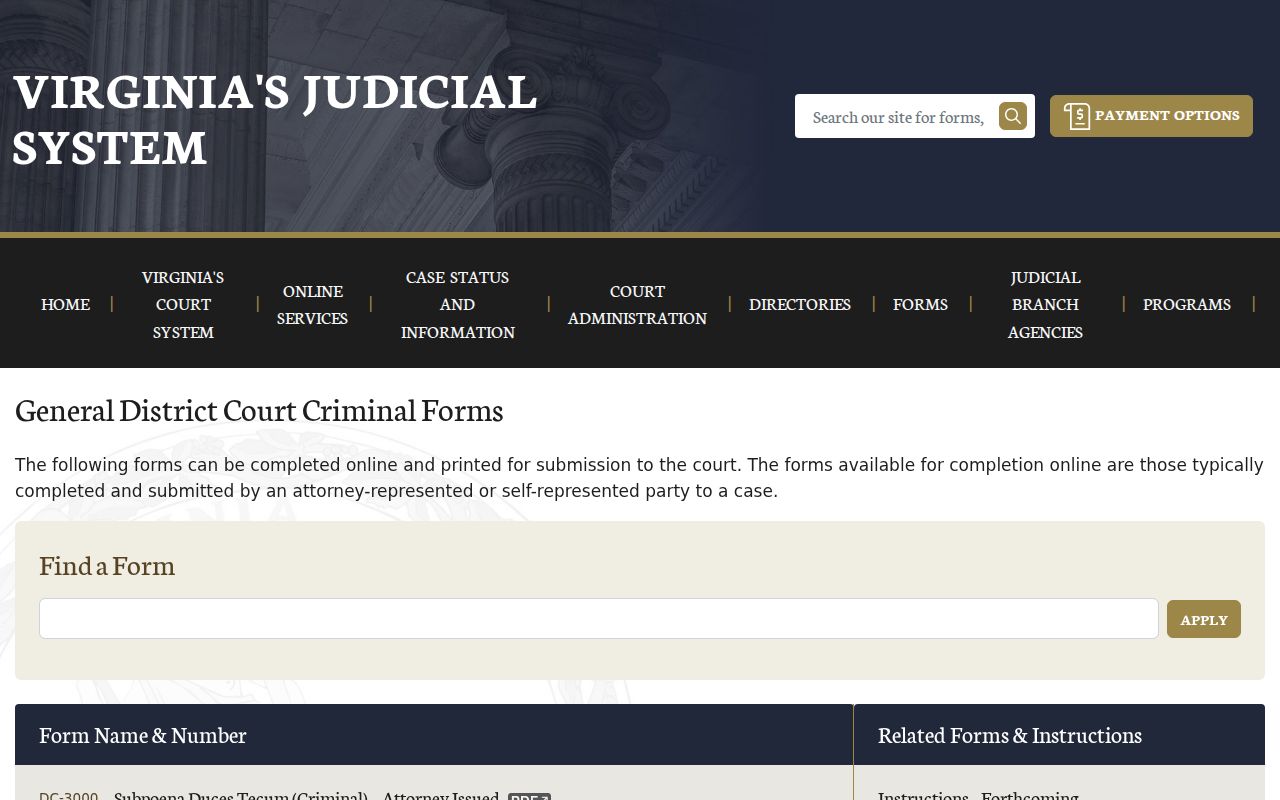
These names describe forms, not the outcome of a particular Amelia County case.
How a Bench Warrant Is Issued
A missed appearance can lead the judge to direct further court process. Virginia Rule 7C:3 describes complaints, warrants, summonses, and capias used in General District Court criminal and traffic matters. A failure to appear after a summons can produce a warrant under the applicable rule. The exact response depends on court level, case type, prior order, and the judge's action.
The clerk records court action; law enforcement may receive process for service. An online case screen and an agency status record can update at different times. Ask the clerk what process was issued and whether the Sheriff has received the recall or service information.
Willful Failure to Appear in Amelia County
Virginia Code § 19.2-128 addresses a willful failure to appear, forfeiture, and possible penalties. The word “willful” matters: the law does not treat every missed hearing as the same event. It directs the court to consider mitigating circumstances, including illness or an unforeseen transportation problem. The judge decides what happened in a particular case.
If a date was missed, contact the clerk promptly. Explain that the person wants to know the docket status and ask whether the court requires a new setting, show-cause hearing, bond review, or motion. Keep any notice or proof of the circumstances for counsel and the court.
Bench Warrant vs Arrest Warrant
A bench or capias process is tied to an existing court obligation. An arrest warrant under Virginia Code § 19.2-72 follows a probable-cause review for an alleged offense. Either can lead to arrest, but the record and next contact differ. See Amelia County arrest warrants for the complaint and service route.
| Feature | Bench Warrant | Arrest Warrant |
|---|---|---|
| Trigger | Missed appearance, court order, or contempt issue | Probable cause on a criminal complaint |
| Issuing role | Court handling the existing case | Authorized magistrate or judge |
| Case link | Pending court obligation or order | Offense allegation and its case path |
| Next step | Ask the court about appearance or recall | Confirm process and bond with the issuing court |
The DC-323 Recall-of-Process Route
Virginia's General District Court materials identify DC-323 as Recall of Process. A court may recall unserved process when a person voluntarily appears, but the court directs the action and must communicate it to law enforcement. A phone call or payment alone does not establish that the warrant record has been recalled.
No Amelia-specific recall packet, local fee, or standing order was located. Ask the issuing clerk whether the judge wants a written motion, a new appearance, or attorney filing. The official criminal forms index lists DC-323; the form list is shown here.
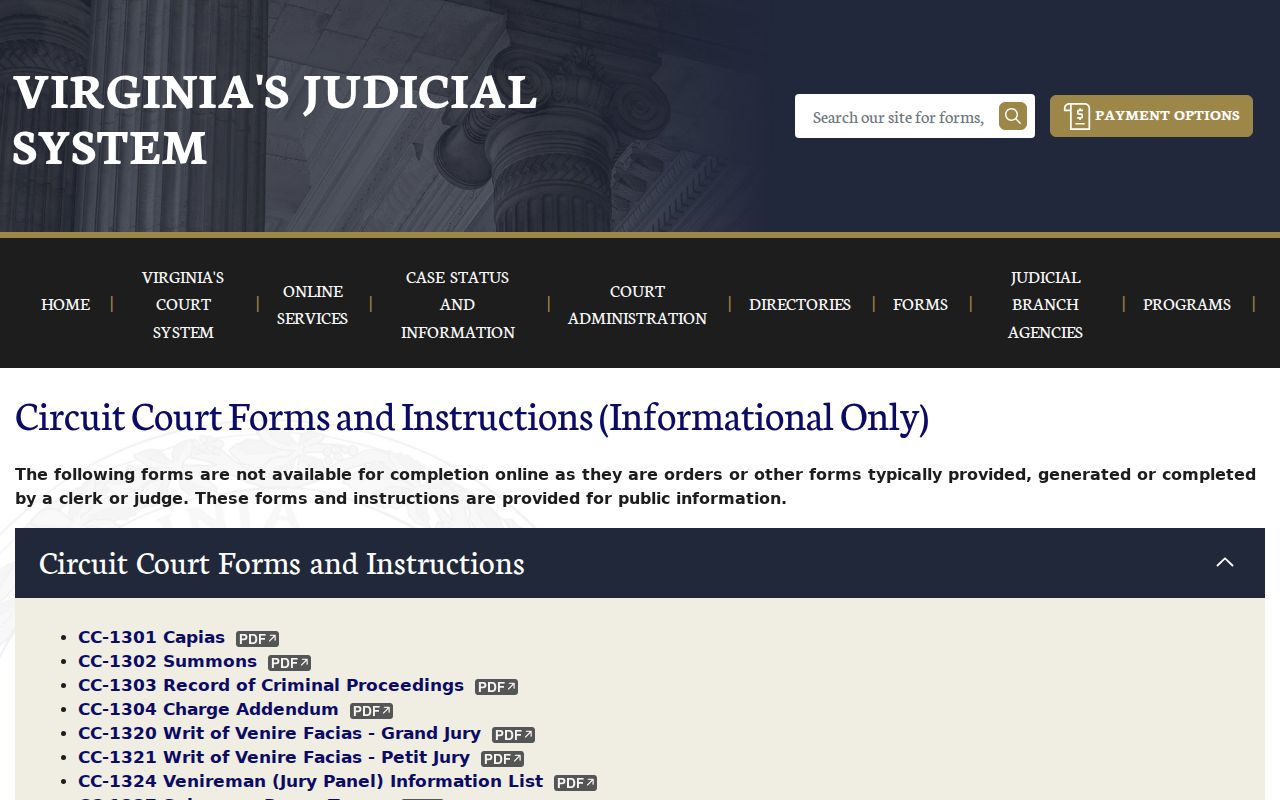
Follow the court's filing instructions rather than using a generic form found elsewhere.
How to Resolve an Amelia County Bench Warrant
First confirm which court issued the process and whether it is served or unserved. The clerk can explain whether the court expects an appearance, a motion, a new date, or bond. The Sheriff's Office handles service questions, but the court controls recall. Ask the clerk how to verify that a recall reached the serving agency.
- Use the case paper or OCIS to identify the court and case number.
- Call the clerk and ask the exact process label and current status.
- Consult a Virginia attorney about a voluntary appearance, recall motion, bond, or show-cause hearing.
- Confirm where and when to report; Amelia does not publish a walk-in surrender window.
- After court action, keep the order or receipt and confirm that the clerk and Sheriff updated their records.
Caution: Do not assume a missed date has resolved itself. Confirm the case with the issuing clerk and get legal advice before appearing.
Circuit Capias Versus District Capias
The court in the case caption is the key. Amelia Circuit Court handles felony and circuit-level records. The General District Court handles adult misdemeanor, traffic, and preliminary felony matters. JDR handles juvenile, domestic-relations, and child-support issues. The court directory lists combined General District/JDR contacts, but their case records remain subject to different access rules.
The Virginia Court glossary explains “capias” and related terms. Its official page is shown below; a glossary definition does not replace a clerk's explanation of a specific order.
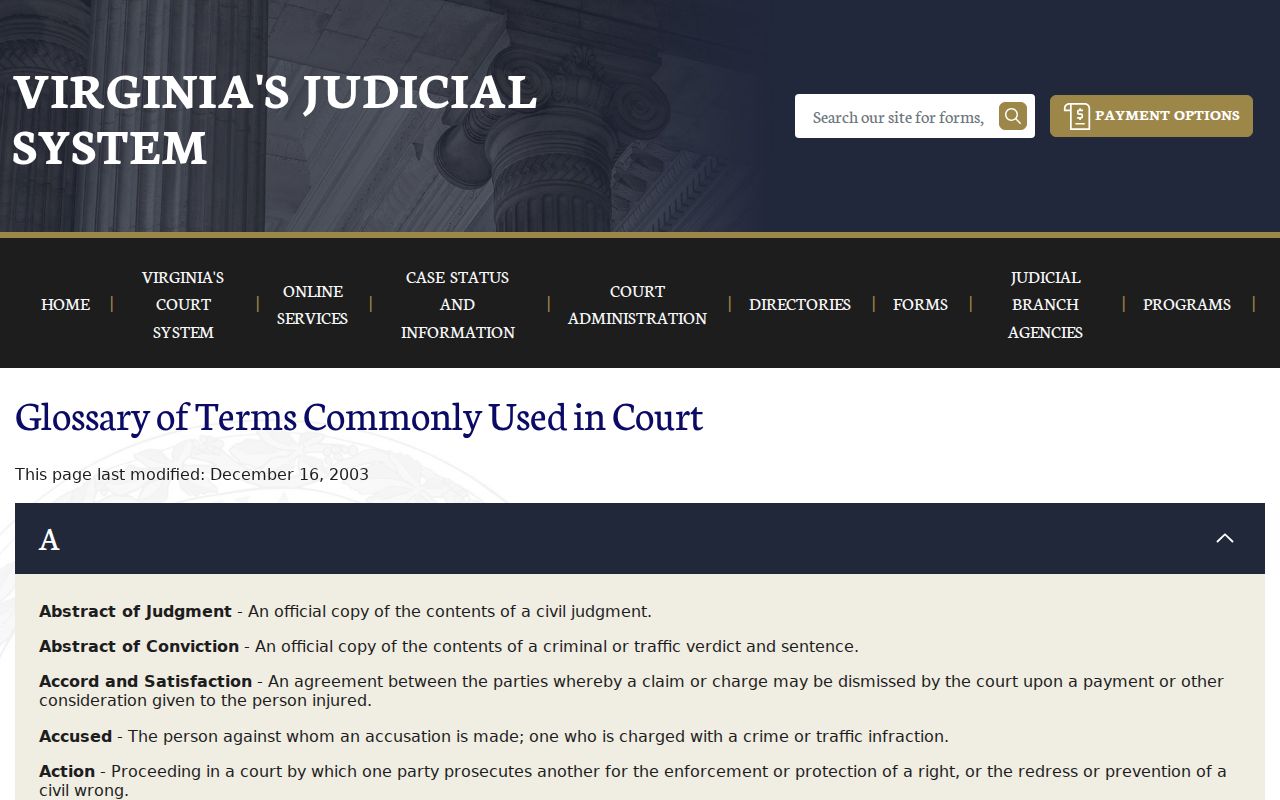
Check the case type before contacting a different court or the Sheriff's Office.
Which Amelia County Court Issued It
A bench warrant or capias follows the court case. For adult traffic and misdemeanor process, contact Amelia General District Court. For circuit records or felony process, contact the Amelia Circuit Clerk. For a juvenile or family matter, call the combined clerk and ask how JDR confidentiality affects the request. The Sheriff's Office may know whether process was served, but it cannot recall court process on its own.
The Amelia County warrant search page explains how to find a public case row and identify the court. If the case paper is unclear, read the caption to the clerk and ask which office controls it.